
Stakeholder Engagement|Analysis of Material Topics



Analysis of Material Topics and Stakeholder Communication
Material Topic Identification
Nuvoton identifies its material topics in accordance with the GRI Standards 2021 issued by the Global Reporting Initiative (GRI) and the AA1000 AccountAbility Principles Standard (AA1000APS). Nuvoton pursues corporate sustainability by referencing the 2021 version of the Global Reporting Initiative (GRI) Standards and the AA1000 Accountability Principles Standard issued by the Global Reporting Initiative (GRI). It identifies material topics based on the principles of inclusivity, materiality, responsiveness, and impact. Following the GRI 3: Material Topics 2021 framework, it constructs a process for analyzing material topic to assess the positive and negative impacts of these issues on the environment, economy, and people (including human rights).
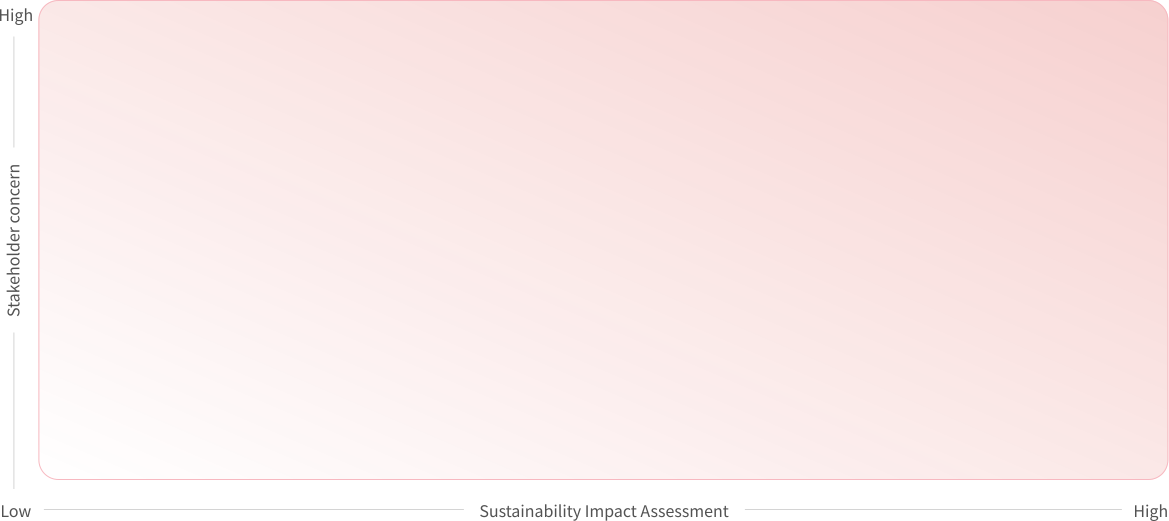
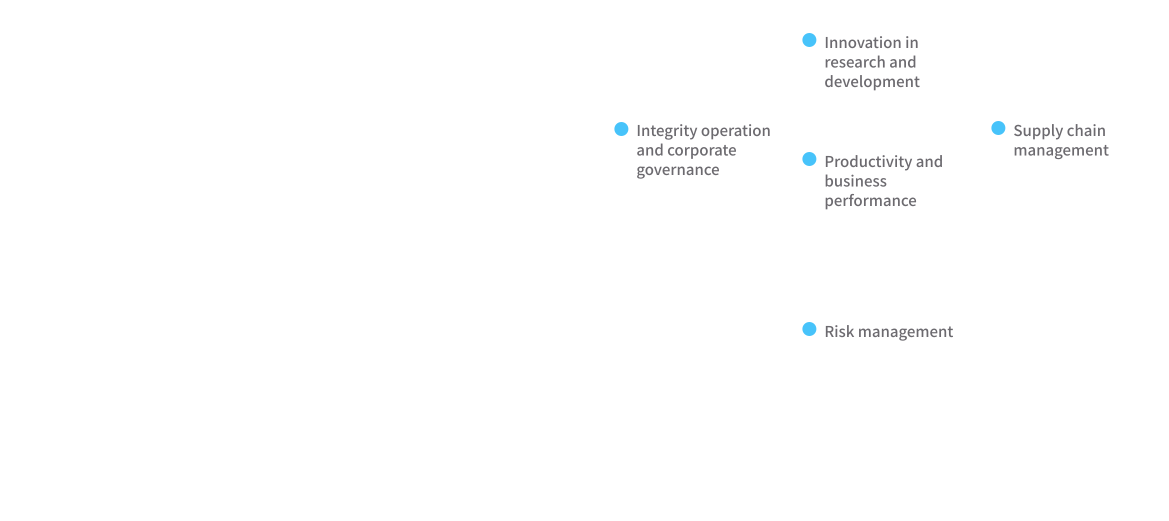
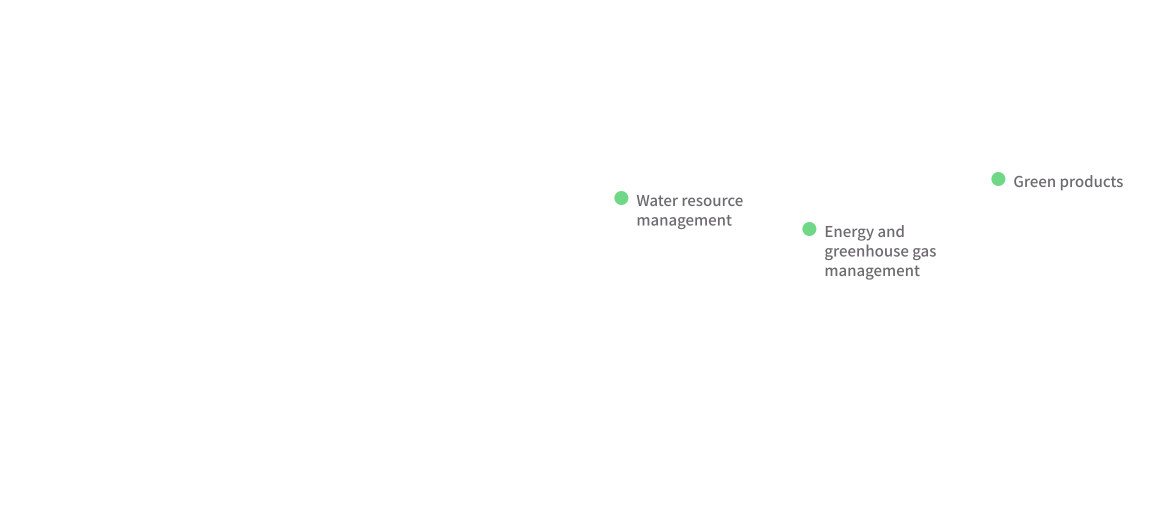
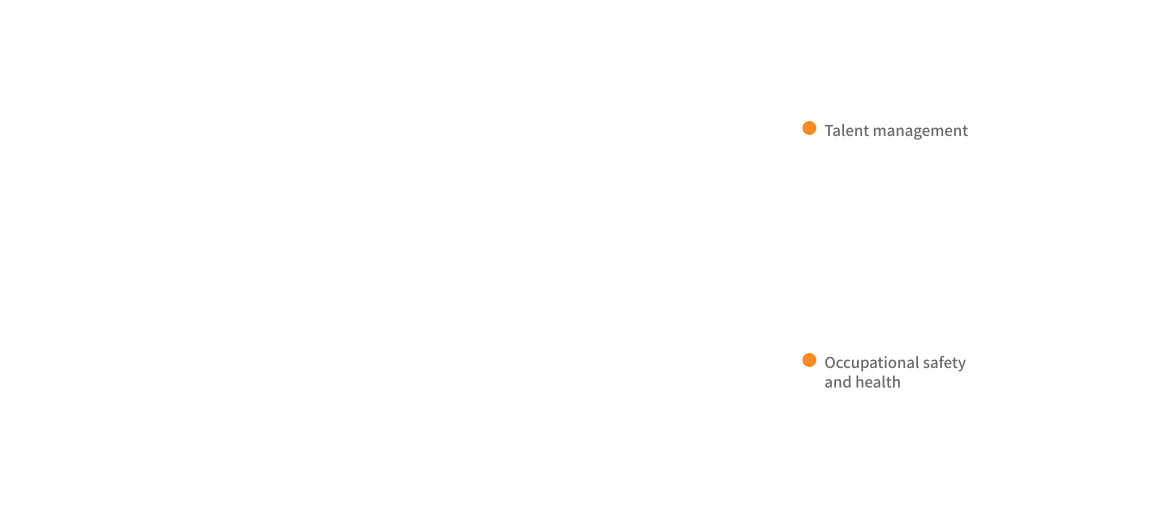
Nuvoton conducted its materiality assessment in coordination with its parent company, Winbond, aligning with the Group's overall survey and adjusting its list of material topics based on the Group's final determinations. This approach ensures consistency with Group-level disclosures while enhancing the completeness and international comparability of the report. The materiality matrix was developed based on weighted stakeholder concern levels and sustainability impact assessments, and further refined and prioritized by taking into account the Company's key sustainability objectives. Through this process, a total of 10 material topics were identified for 2025 (as shown in the table below). Compared to 2024, two new material topics—Water resource management and occupational health and safety—were added in 2025. In addition, the material topic of regulatory compliance has been incorporated into the 2024 material topic of Integrity operation and corporate governance.
Analysis Process of Material Topic

01 Establishing Sustainability Issues Database
Nuvoton developed its sustainability issues database by building upon prior-year issue inventories, referencing industry practices and international trends, and evaluating the impacts and challenges of its operations and business relationships across economic, environmental, and social (including human rights) dimensions. Stakeholder profiling was also incorporated to establish a comprehensive sustainability issues database for the year.

02 Surveying Issues of Concern by Stakeholders
Stakeholder concern surveys were distributed to assess the level of attention each stakeholder group places on various sustainability issues. The results were used to prioritize the relative importance of each issue.

03 Evaluating Sustainability Impacts
Senior management and representatives from the Task Forces under the Sustainability Development Committee evaluated the magnitude and likelihood of both positive and negative impacts associated with each sustainability issue across economic, environmental, and social dimensions (including human rights).

04 Ranking and Confirming Material Topic
Building upon the significance of impacts determined from the results of Phases 02 and 03 of the questionnaire by the Group Senior Management, issues from governance, economic and social dimensions were selected, considering adjustments to the Group's sustainable development priorities, to form the final 10 material topics.

05 Approval of Material Topic
Based on the Group's material topic analysis results, the list of material topics was confirmed by the Sustainability Development Committee. Relevant Task Forces then formulated corresponding management approaches for each material topic, which were subsequently submitted to the Board of Directors for final approval.
Matrix on Material Topics
List of Material Topics and Their Impact
| Material Topics1 | Significance for Nuvoton | Positive / Negative Impacts | Value Chain Impact Boundaries | Lead Divisions |
|---|---|---|---|---|
| Integrity operation and corporate governance2 | A robust governance framework ensures full compliance with all regulations relevant to the Company's operations, meets stakeholder expectations, and supports sustainable business operations |
|
| Corporate Governance task force of the Sustainability Development Committee |
| Risk management3 | A robust risk management framework supports the Company's long-term stable development, maintains customer satisfaction, and safeguards corporate assets and reputation |
|
| Corporate Governance task force of the Sustainability Development Committee |
| Supply chain management | Suppliers are key partners for Nuvoton in advancing sustainable development. Supply chain risks not only affect operational, production stability and procurement costs, but supplier-related human rights or environmental incidents may also impact the Company's brand reputation and customer trust |
|
| Sustainable Supply Chain task force of the Sustainability Development Committee |
| Productivity and business performance | Enhancing productivity and operational performance is critical to the sustained development of Nuvoton. By optimizing resource allocation and strengthening R&D capabilities, the Company ensures a sound financial position while increasing revenue and profitability, thereby enhancing corporate value and overall operating efficiency |
|
| Corporate Governance task force of the Sustainability Development Committee |
| Innovation in research and development | Innovation in research and development is a key driver of the continued growth of Nuvoton. Through technological breakthroughs and differentiated products, the Company enhances product competitiveness, expands market opportunities, and meets diverse customer needs |
|
| R&D departments across business groups |
| Green products | Green products have become a key focus across the industry in recent years. Investment in green products development not only reduces environmental impacts and meets customers' sustainability expectations, but also enhances Nuvoton's sustainable competitiveness, strengthens brand image, and supports long-term development advantages |
|
| Green Products task force of the Sustainability Development Committee |
| Energy and greenhouse gas management4 | Nuvoton has implemented energy-saving technologies and increased the use of renewable energy. The Company minimizes environmental impacts across its operations, product design, and production processes, while promoting energy management systems to achieve effective green environmental management |
|
| Environmental Sustainability task force of the Sustainability Development Committee and Finance unit |
| Water Resource Management | Water resource management is not only an environmental responsibility for Nuvoton, but also a critical factor in maintaining process stability and product quality. Semiconductor manufacturing is highly water-intensive, and any water-related risks may affect production efficiency and supply chain resilience. In addition, inadequate treatment of process wastewater may result in environmental pollution and regulatory risks |
|
| Environmental Sustainability task force of the Sustainability Development Committee and Finance unit |
| Talent management5 | Attracting, retaining, and developing talent are not only core corporate responsibilities but also critical to maintaining a competitive edge in a highly dynamic market. Nuvoton is committed to fostering an inclusive and supportive workplace that promotes employee growth, continuously enhances employee satisfaction, and ensures sustainable talent development |
|
| Human Rights and Social Inclusion task force of the Sustainability Development Committee |
| Occupational Safety and Health | Occupational safety and health (OSH) is not only a fundamental regulatory requirement but also the cornerstone of employee well-being. Through the active participation of all employees, Nuvoton continues to reduce the disabling injury rate and minimize the use of chemical substances, implementing the principle of "design for environmental protection, safety, and health." |
|
| Human Rights and Social Inclusion task force of the Sustainability Development Committee, Occupational Safety and Health Committee, EHS (Environment, Health, and Safety) Management Department |
1 Change in Material Topic Lists: Nuvoton Technology Corporation aligned its 2025 material topics with those of its parent company, Winbond Electronics Corporation, and made adjustments across three areas: 1. Consolidation of topics: The 2024 topic "Regulatory Compliance" has been integrated into "Integrity Operation and Corporate Governance." 2. Addition of new topics: Water Resource Management and Occupational Health and Safety were newly added in 2025. A total of 10 material topics were identified for 2025.
2 The topic "Integrity Operation and Corporate Governance" encompasses the content of both "Integrity Operation and Corporate Governance" and "Regulatory Compliance."
3 Risk Management covers "Risk Management" and "Information System Security and Personal Data Protection."
4 Energy and Greenhouse Gas Management includes content related to both "Energy and Greenhouse Gas Management" and "Climate-Related Risks and Opportunities."
5 Talent management includes "Remuneration and benefits and employee care," "Talent recruitment and cultivation," "Human rights and equality" and "Labor relations."