

サプライチェーン|サプライチェーン

サプライチェーン

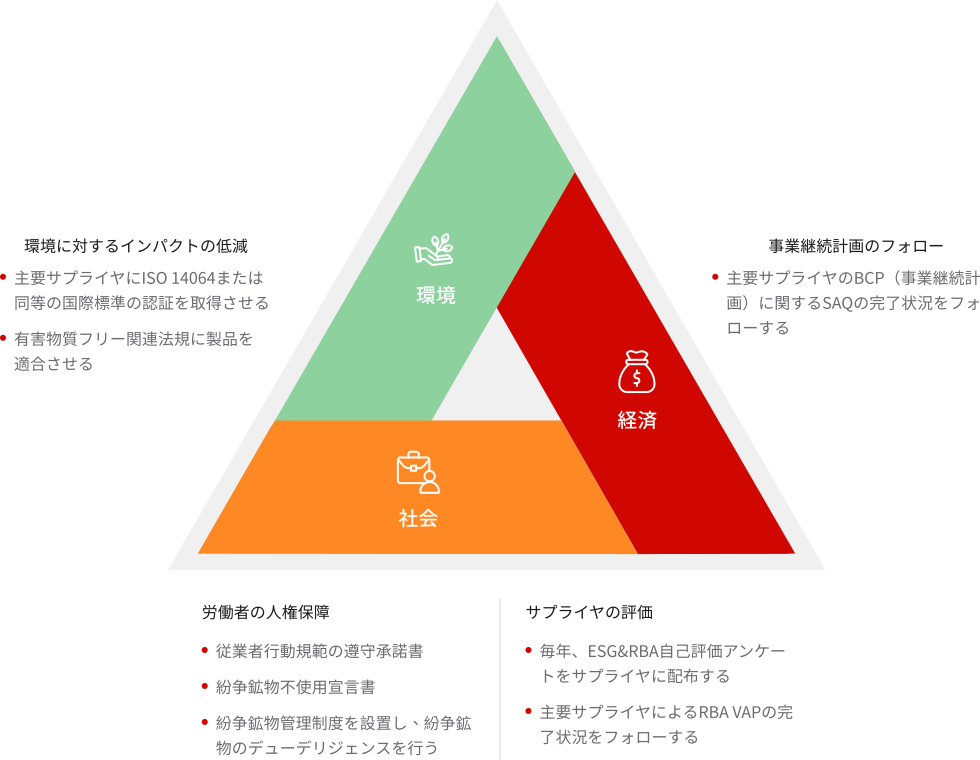
私たちは、サプライヤー評価および監査項目にESGの視点を取り入れ、持続可能なサプライチェーンの実現に向けたビジョンを共有・推進するために、サプライヤーとの連携を強化しています。企業としての影響力を活かしながら、共に価値を高める取り組みを進めています。
SDGS
SDG 8 働きがいも経済成長も
SDG 9 産業と技術革新の基盤を作ろう
SDG 12  つくる責任、つかう責任
SDG 13 気候変動に具体的な対策を
SDG 16 平和と公正をすべての人に
SDG 17 パートナーシップで目標を達成しよう

57

%

The proportion of main suppliers that completed the RBA VAP in 2025 is

100

%

Annual response rate for supplier conflict minerals survey

43.7

%

The proportion of local procurement in Nuvoton Taiwan's total procurement reached 30.3%, while that of Nuvoton Japan reached 43.7%

サプライチェーンの構成と概況

Since its establishment, Nuvoton has been committed to building a stable and resilient semiconductor supply chain for the long term. Nuvoton places emphasis on the localization of raw material production, continuously increases the proportion of local procurement, and gives priority to environmentally friendly products that are low-pollution and recyclable. By fulfilling social and environmental responsibilities throughout the supply chain, Nuvoton strives to create a positive impact across the three dimensions of society, the environment, and the economy. Nuvoton requires 100% of suppliers providing minerals of concern identified by the Responsible Minerals Initiative (RMI) to sign the "Declaration of Non-Use of Conflict Minerals." In addition, qualified suppliers on the Approved Vendor List (AVL) are required to sign the "Code of Conduct Compliance Commitment" and the "Confidentiality Agreement," while sustainability criteria are incorporated into supplier evaluations. Suppliers also regularly make declarations and ensure that the raw materials used in Nuvoton products are sourced from qualified smelters, with 100% traceability of raw material sources.

Nuvoton has established targets to gradually increase the proportion of major suppliers that have passed the RBA Validated Assessment Program (VAP) and published sustainability reports, while encouraging suppliers to obtain international certifications and standards, such as ISO 14064 and ISO 14001, to strengthen greenhouse gas management and environmental management practices.

サプライヤ類型

化学薬品
外部委託加工
請負業者
ターゲット材
プライムウェーハ
マスク
ウェーハ
ガス
アウトソーシング
石英

現地調達

In recent years, Nuvoton has been committed to procuring locally produced raw materials to reduce transportation costs, carbon emissions, and supply chain risks. Nuvoton also aims to support local production, thereby enhancing product quality control, shortening delivery lead times, and creating more local employment opportunities.

For Nuvoton Taiwan, local suppliers are defined as suppliers located in Taiwan, while the key operating site is the Taiwan headquarters. For Nuvoton Japan, local suppliers are defined as suppliers located in Japan, while the key operating site is the Japan headquarters.

In 2025, the proportion of local procurement by value for raw materials at Nuvoton Taiwan was 30.3%. At Nuvoton Japan, the proportion of local procurement by value for components (including key raw materials), outsourced processing, and subcontracted manufacturing was 43.7%. Due to adjustments in procurement strategies, these proportions decreased by 14.3% and 16%, respectively, compared with the previous year. Despite the limitations imposed by the characteristics of the semiconductor industry, local procurement remains an important consideration in Nuvoton's supplier selection. Nuvoton Taiwan has set a target to increase the proportion of local procurement for key raw materials to 31% by 2030.

原材料サプライヤからの現地調達額の総調達額に対する割合

グリーン調達

Nuvoton is committed to actively supporting the green procurement policies instituted by the Taiwanese government, fully integrating this philosophy into its procurement management framework. The organization prioritizes the selection and acquisition of environmentally sustainable products that adhere to the standards of "low pollution, resource efficiency, and recyclability," with particular emphasis placed on the energy efficiency of equipment. Specifically, Nuvoton considers energy efficiency as a fundamental criterion when procuring or replacing equipment, thereby prioritizing the acquisition of energy-efficient equipment that complies with the low energy consumption standards as promulgated by the Energy Administration, Ministry of Economic Affairs or possesses the "Energy Saving Label." This approach is designed to achieve significant energy savings, reduce carbon emissions, and lower operational costs.